What the DMCA actually is
The Digital Millennium Copyright Act is a 1998 US federal law. The part everyone means when they say "DMCA" is §512 of Title 17 — the Online Copyright Infringement Liability Limitation Act — which created the safe-harbor system. The deal it offers US service providers is simple: you are shielded from copyright liability for what your users host if you register a designated agent, adopt a repeat-infringer policy, and remove material "expeditiously" when a rightsholder sends a compliant notice.
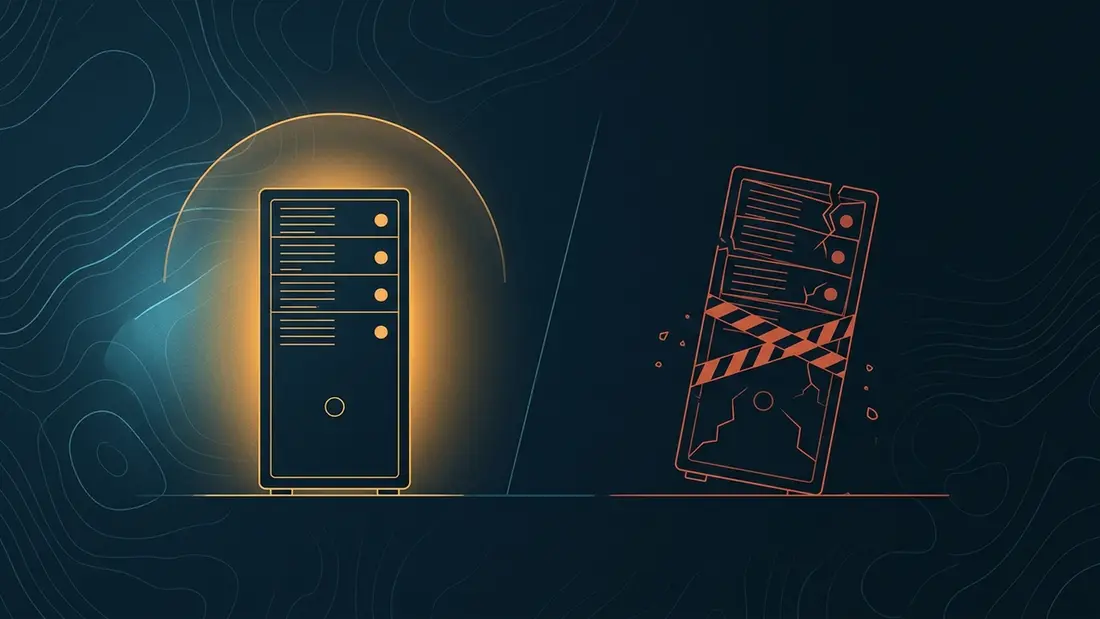
Read that carefully. A DMCA notice is not a court order. It is a private allegation: no judge reviews it before it lands, and the sender swears under penalty of perjury only that they are authorised to act for the rightsholder — not that the claim is actually correct. The system was engineered on the assumption that providers would over-comply, because the alternative is gambling their safe harbor on every disputed file. Inside the United States, that assumption has proven exactly right.
SP·02Why US hosts fold instantly
For a US host, ignoring a notice means risking the safe harbor for that material — and with it, exposure to statutory damages that can reach six figures per work for willful infringement. Multiply by thousands of files and the arithmetic makes the decision: process everything, fast, and ask questions never.
This is why takedown at US providers is effectively automated. Rightsholder agents send notices by the million, generated by scrapers with notoriously sloppy matching, and the statutory counterweight — §512(f) liability for material misrepresentation — has been read so narrowly by courts that it deters almost nothing. False positives, fair-use removals and competitor sabotage are routine, documented, and rarely remedied. The target of a bad notice gets a counter-notice procedure that takes weeks and exposes their identity; the sender of a bad notice usually gets nothing worse than a shrug.
None of this is a moral failing of US hosts. It is rational behaviour inside the incentive structure the statute built. The point is that the structure is jurisdictional — and so is the exit.
SP·03Where the statute stops
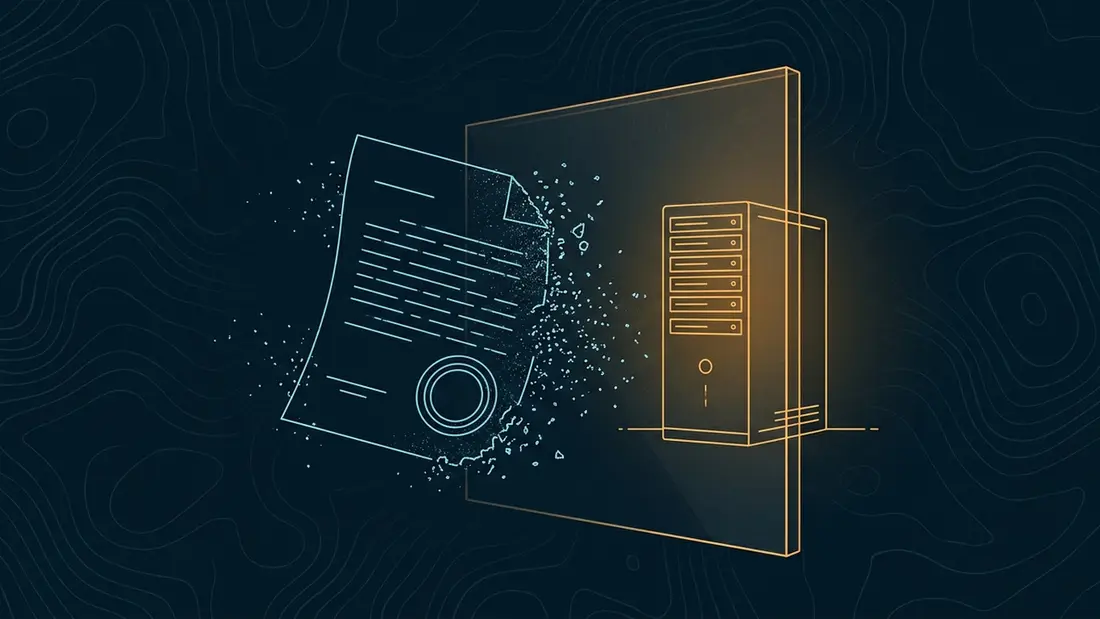
US statutes bind people and companies subject to US jurisdiction. A hosting operation with no US entity, no US assets, no US servers and no US staff is not playing the §512 game at all. There is no safe harbor to lose, because the liability regime the safe harbor protects against belongs to courts that have no writ over the servers in question.
Could a US rightsholder still pursue the matter? In theory, yes — by suing where the server actually is, under that country's copyright law, in that country's language, to that country's evidentiary standard. Or by winning a US judgment and then asking a foreign court to recognise and enforce it: a separate proceeding that foreign courts approach skeptically, particularly where their own courts never examined the claim. Treaty channels — MLATs — exist for criminal matters, move at diplomatic speed, and are essentially unavailable for routine civil copyright complaints.
In practice, the volume economics that make US takedowns free do not survive the border. That asymmetry — automated webform notices on one side, full foreign litigation on the other — is the entire substance behind the phrase "DMCA-ignored". It is not magic. It is procedure, priced honestly.
One adjacent point, since it confuses people: the EU has its own intermediary framework (the e-Commerce Directive, now the Digital Services Act), and it is sometimes waved around as "Europe's DMCA". It is not a takedown webform either. A DSA notice is still a private allegation, and what an EU host must ultimately obey remains the same thing it always was — an order from a court or competent authority with jurisdiction over it.
SP·04Our exact stance
Here is our position, stated precisely, because vague versions of it cause confusion in both directions.
DMCA notices are not processed or answered. The DMCA is a US statute with no force in the jurisdictions where our servers operate. We do not maintain a designated agent, we do not operate a notice inbox, and we do not forward notices to customers as implied threats. There is nothing to submit and nobody whose job is to read it.
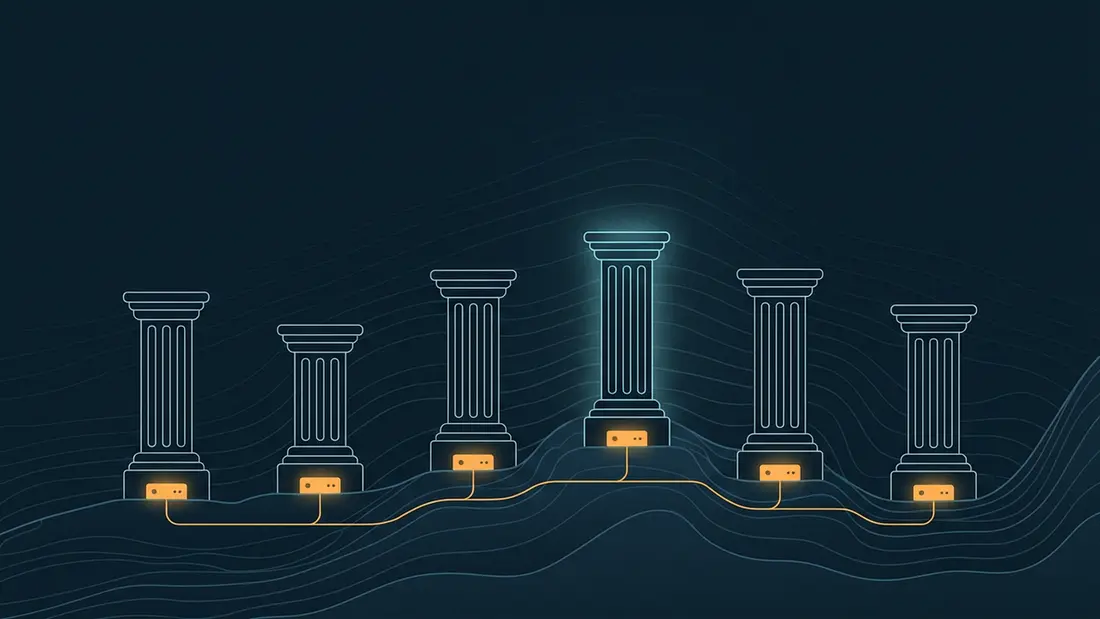
What we do act on: a binding order from a court with jurisdiction over the specific server. If a Romanian court issues an order concerning a Bucharest server, we comply — narrowly, to the letter of the order, and to that order alone. The same standard applies in each of our 6 regions, and the per-region posture is documented on the locations page and in our jurisdiction comparison.
This is not defiance; it is how jurisdiction works. We follow the law that actually applies to us — all of it — and decline to volunteer for statutes that do not.
SP·05Myths vs reality
The phrase attracts mythology from fans and critics alike. The record, straightened:
- Myth: "DMCA-ignored means anything goes." No. Our acceptable-use policy applies in every region and is enforced by us, on our own initiative — no foreign notice required. No-KYC is not no-rules.
- Myth: "Offshore makes content untouchable." No. A determined claimant can litigate where the server is. What changes is the cost and the standard of proof: a won court case instead of a free webform.
- Myth: "Hosts that decline DMCA notices are breaking the law." Declining to operate a US statute's voluntary safe-harbor process, from outside US jurisdiction, breaks no law. The content itself is governed by the law of the place where it is hosted — which is why jurisdiction choice matters.
- Reality: pressure finds other channels. Domain registrars, upstream networks and payment processors are the usual soft targets. We mitigate the last one structurally — a prepaid crypto balance instead of a card processor with a compliance lever to pull — and choose transit relationships with the same posture in mind.
What still gets content removed
Three things, and only these:
- AUP violations. Spam and mail abuse, CSAM, malware command-and-control, launching denial-of-service attacks, phishing. These get a server suspended on our initiative, usually before anyone outside notices. The full list is in the AUP.
- Binding court orders from a court with jurisdiction over the specific server, executed narrowly, as written.
- Abuse that endangers the platform — anything that gets address space blacklisted or degrades other customers' service gets contained first and discussed second.
Everything else — angry letters, automated notices, "final warnings" from law firms with no local standing — produces no action. If you want the precise account-side picture of what we hold and could ever be compelled to produce, read the no-KYC policy: the honest answer is a handle, an argon2id password hash, a balance, and your server's specs.
SP·07How to vet a "DMCA-ignored" claim
The label is unregulated, so plenty of resellers print it on infrastructure that is one upstream email away from folding. Five checks separate posture from marketing:
- Named jurisdictions. The provider says where servers physically are and why those countries — not "offshore locations" in the abstract.
- A coherent legal theory. "We act on local court orders only" is a position. "We ignore everything" is a confession — see offshore vs bulletproof.
- A real AUP. A host with no published rules will not survive contact with its own regulators, and its address space is already on blocklists.
- Payment that matches the promise. A privacy host billing through a US card processor has handed the takedown lever to exactly the wrong party. Ours is a crypto balance, topped up from $30.00.
- Honest data inventory. Ask what they hold about you. If the answer is vague, so is the protection.