


Top of the coin list
XMR is featured alongside BTC at checkout, not hidden behind an "other" dropdown — and it stays supported because no processor can drop it for us.
Pay for your VPS with XMR and the transaction stays between your wallet and us. Monero sits at the top of our coin list, not in an "other" dropdown: invoices quote XMR natively, the balance model keeps on-chain payments to a minimum, and no payment processor screens the transfer. KVM plans from $8.00/mo in 6 offshore jurisdictions, online in 15 min.

Base prices shown — regional modifiers and period discounts apply in the configurator.
Most hosts that "accept Monero" actually accept a payment processor that tolerates it — a third party that risk-scores transactions, delists XMR whenever the compliance weather changes, and keeps its own records of who paid whom. We removed that layer. Checkout here was designed around crypto from the start: XMR sits first in the coin list next to BTC, invoices quote a native XMR amount with a QR code and a countdown, and the status flips on its own as the network confirms.
Because no processor sits in the loop, there is no third-party ledger entry connecting your wallet to your server, no merchant-account paper trail, and no risk that Monero support quietly disappears one quarter. The deposit address you pay is generated for your invoice alone. Pair that with an account that's just a handle — see the no-KYC policy — and the payment chain holds exactly two parties: you and us.
You don't pay per server; you fund a balance and spend it. One XMR topup — anywhere from $30.00 to $5,000.00 — covers deploys and renewals for months, because servers debit the balance internally with no on-chain event at all. For a Monero user that's the right shape: fewer transactions to broadcast, fewer interactions to time-correlate, and no recurring payment pattern that says "hosting bill" to anyone studying flows.
The balance itself is held in US dollars, credited at the rate your invoice was quoted, so a renewal next quarter costs what the price list says — your hosting budget doesn't ride XMR volatility in either direction. Unused balance is refundable as crypto within 30 days, minus network fees. The mechanics are documented end-to-end in crypto billing, explained.
From your panel, choose a topup amount and select XMR. The invoice shows a deposit address generated for that invoice alone, the exact XMR amount, a QR code and copy buttons; send from any wallet — your own node, a hardware wallet, or a light wallet over a remote node all work, because we never ask where funds came from. The page polls on its own: awaiting becomes confirming when the transaction hits the network, then paid once confirmed, at which point the balance is credited and any deploy on the fleet is about 15 min from root access, across 6 offshore regions.
First time paying for infrastructure in Monero? The step-by-step guide covers wallets, fees and the common mistakes.
Same platform on every plan — the floor and the flagship ship identically.
XMR is featured alongside BTC at checkout, not hidden behind an "other" dropdown — and it stays supported because no processor can drop it for us.
Renewals and new servers debit your prepaid balance internally — zero additional on-chain transactions after the topup.
No payment processor, no merchant account, no third-party ledger. The transfer runs from your wallet to our address, and Monero keeps even that opaque.
The short version — the full list lives on the FAQ page.
No. Every coin clears at the same USD price — a topup paid in Monero credits the same balance as one paid in BTC or a stablecoin. Privacy here is not a premium feature.
The invoice page polls automatically and credits your balance once the Monero network confirms the transaction — typically a handful of minutes after broadcast. No screenshot, no support ticket, no manual review step.
No. Any standard wallet works, whether it talks to your own node or a remote one. We see only the incoming transaction to your invoice's deposit address — how you built it is invisible to us, which is rather the point of Monero.
No — balances are denominated in US dollars, credited at the rate quoted on your invoice. Server prices are fixed in USD too, so what you see on the plans page is what renewals cost regardless of where XMR trades next month.
7 cryptocurrencies across 8 coins and network variants — BTC, XMR, ETH, LTC, stablecoins on several networks, and more. XMR and BTC are featured first at checkout. For maximum payment privacy, Monero remains the recommendation.
More on payments, refunds and the SLA in the full FAQ.
 Bitcoin VPS
Buy a VPS with bitcoin: top up from $30.00, deploy in 15 min across 6 offshore regions. From $8.00/mo, 7 cryptocurrencies supported, no identity checks.
No KYC VPSNo-KYC VPS hosting: register with a handle, top up from $30.00 in crypto, deploy in 15 min. No email, no phone, no ID — and no verification tier later.
 Offshore VPS
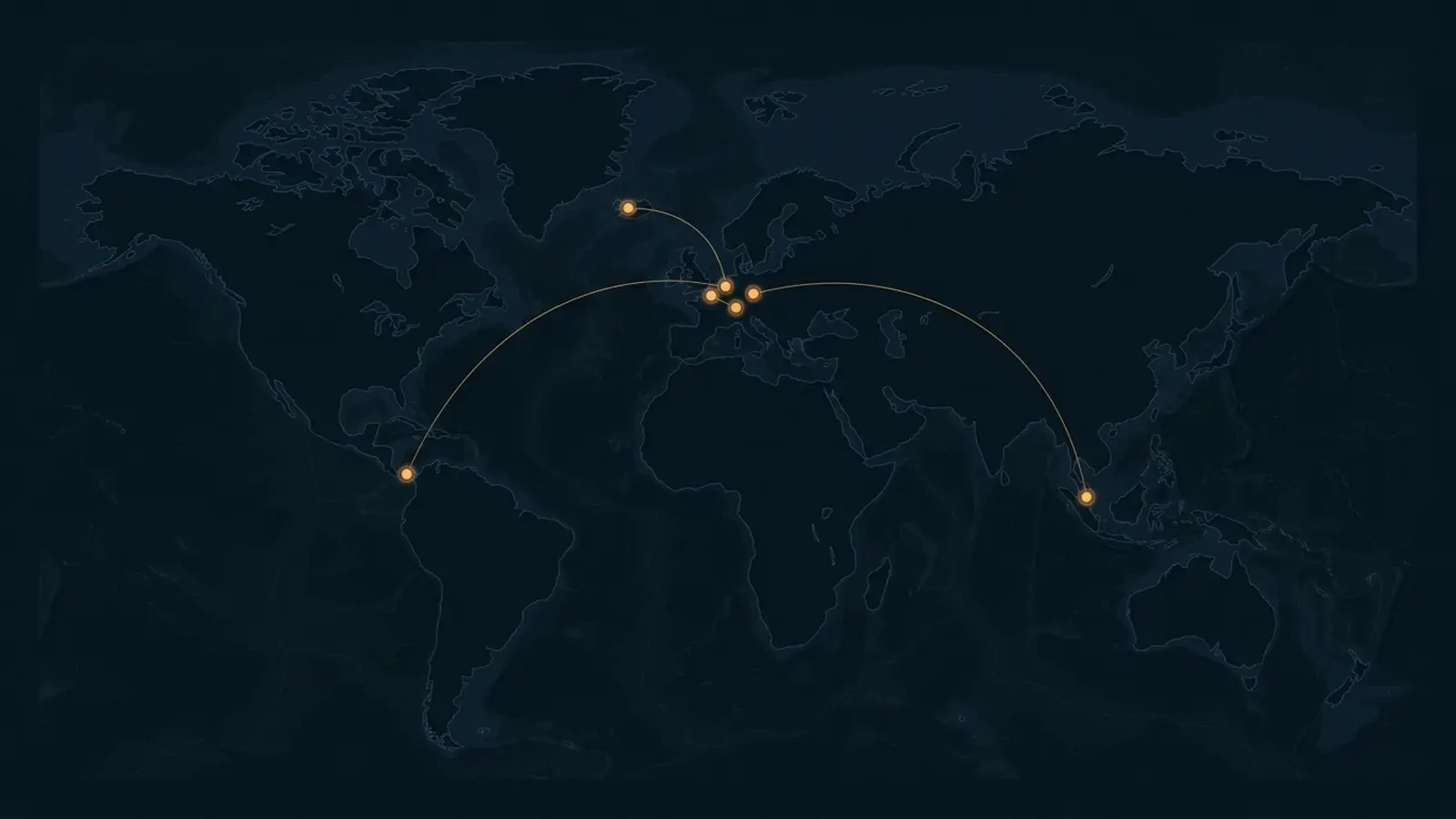
Offshore VPS hosting across 6 jurisdictions, Romania to Panama. Crypto-only, no identity checks, 1.5 Tbps mitigation, online in 15 min. From $8.00/mo.
Top up from $30.00 in Monero and deploy a VPS from $8.00/mo in 15 min.
Sign in to continue
Account created. These 8 recovery codes are shown once and never again. Each resets your password one time. Store them offline.