Where your name leaks onto a server
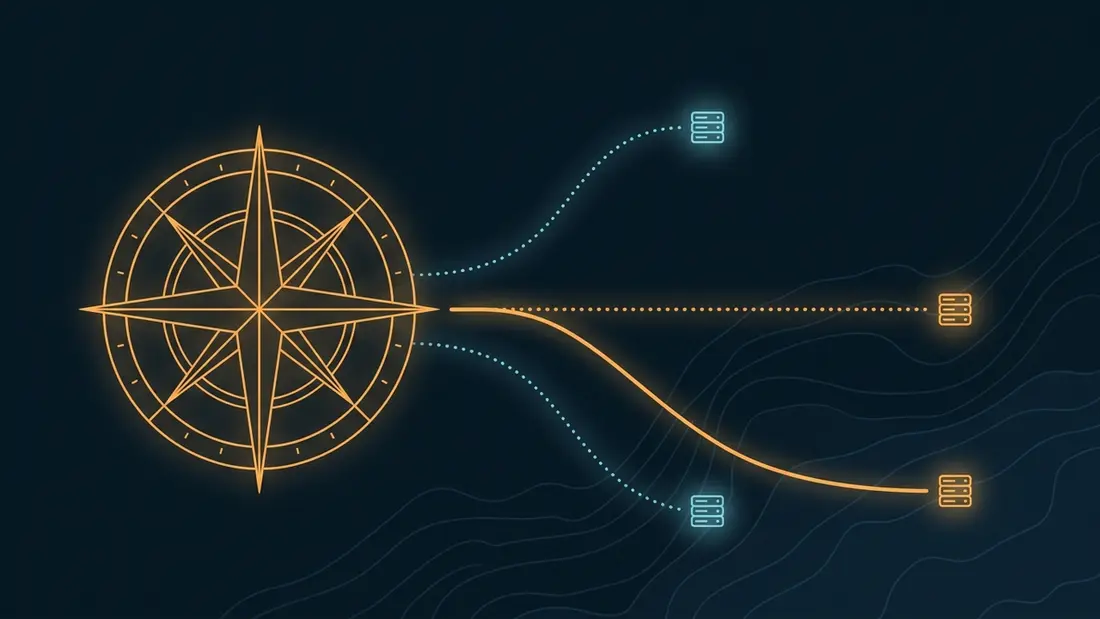
A server is private only as far as its weakest link. Your identity can attach at four distinct points, and a single leak at any one of them unravels the whole chain: the domain (public WHOIS records), the hosting account (KYC and billing identity), the payment (cards and bank transfers map directly to a legal name), and the operational metadata you generate over time — reused SSH keys, recycled handles, an email you also use for shopping, a browser session that crosses between personas.
Wanting to close those points is ordinary and lawful. Journalists protect sources, activists protect themselves, businesses protect infrastructure from competitors and from targeted attacks, and plenty of people simply refuse to feed the identity-harvesting economy for no reason beyond preferring privacy as a default. None of that requires a justification. The work is mechanical: handle each layer deliberately so that no single record, subpoena, or scrape collects the full picture.
SP·02Layer one: the domain
Public WHOIS used to publish a registrant's name, address, email and phone for the world to scrape. ICANN now redacts most personal fields by default under GDPR, but the registrar still holds your real details and can be compelled to hand them over — redaction is a curtain, not a wall. Two moves strengthen it. First, use a registrar that offers genuine WHOIS privacy rather than reselling your data. Second, prefer a Njalla-style registrar that registers the domain in its own name and grants you a contractual right to use it: your details never become the registrant of record in the first place.
Pay the registrar in crypto where you can, keep the domain account on a handle and email you use for nothing else, and run your DNS on nameservers that are not trivially tied back to you. If the domain and the host are at different companies in different countries, neither one alone holds the whole story.
SP·03Layer two: the hosting account
Most hosts demand identity at signup — a name, an address, sometimes a scan of a document — and that record sits in their billing system for the life of the account. A no-KYC host removes that point of leakage by design. With us, the entire account is a handle and a password; a pseudonym is fine, there is no email on file, and there is no identity check at any step. What we technically hold is short and itemised on the no-KYC policy page: the handle you chose (account files are keyed by a SHA-1 hash of it), an argon2id password hash, your balance, your order specs, and briefly-rotated server logs. Nothing in that set is your legal name, because we never collect it.
Jurisdiction matters more than concealment here. Choosing where the server physically sits decides which courts can compel anything. Our stance is fixed and worth knowing before you build: DMCA notices are not processed or answered — the DMCA is a US statute with no force in our jurisdictions — and we act only on a binding order from a court with jurisdiction over the specific server. Pick the region deliberately; the companion guide on choosing an offshore location covers the trade-offs.
SP·04Layer three: payment
Payment is where most private setups quietly fail. A card, a PayPal account, or a bank transfer ties straight to your legal identity and leaves a permanent record at the processor, regardless of how careful you were with the domain and the host. Crypto breaks that link — but not all crypto is equal. Bitcoin is pseudonymous, and its ledger is public and permanently traceable; a chain-analysis firm can often walk a BTC payment back to an exchange withdrawal that was made with your ID. Monero (XMR) is private by default, with ring signatures, stealth addresses and confidential amounts that make the same analysis impractical, which is why it leads our coin list.
Our balance model keeps the purchase itself private too: you top up your account from $30.00 with any of 7 currencies (8 coins and network variants), then pay for servers out of that balance. No per-order payment processor ever sees what you bought — it sees a top-up, nothing more. If you must use Bitcoin, treat it as traceable and convert through a no-KYC swap before topping up. Keep top-ups modest and unremarkable rather than one large round number that stands out in any record, and avoid funding straight from an exchange withdrawal that carries your KYC fingerprint into the payment.
SP·05Layer four: operational hygiene
The cryptography is rarely what fails — the human is. Authenticate to your servers with SSH keys, not passwords, and use a dedicated key per project so one compromise does not unlock everything. Never reuse the handle, email, or password from your private setup anywhere it touches your real identity; one shared login collapses the personas. Keep the work in its own browser profile or a separate VM, and do not log into personal accounts over the same exit IP you use for the private box.
Split the chain across jurisdictions on purpose: registrar in one country, host in another, payment rail in a third, so that no single legal request reaches all of it. Watch the quiet leaks too — DNS queries that escape a tunnel, an rDNS record that names you, an analytics script, a support message written in your usual voice from your usual address. Route order-linked questions through the panel rather than any channel tied to a personal identity, and hold a single consistent persona per project so the personas never cross-contaminate. Privacy is the product of consistent small choices, not one clever trick.
SP·06What's legal — and what isn't
This needs saying plainly. Privacy is legal. Owning a server without broadcasting your name is legal. Paying with Monero is legal. None of the techniques above are wrongdoing, and treating them as inherently suspicious is exactly the surveillance reflex they exist to resist.
But anonymity is not a licence, and it would be irresponsible to imply otherwise. Hiding your name does not make an unlawful act lawful, and it will not shield you from a court that has jurisdiction over the server. No-KYC is not no-rules: our acceptable-use policy forbids spam, CSAM, malware command-and-control, denial-of-service launches and phishing, and breaking it gets the server removed no matter how privately it was paid for. The goal of this guide is to keep ordinary, legitimate activity private from mass data collection — not to pretend the law stops at a privacy curtain.
SP·07A realistic threat model
Match the effort to the adversary. The layered approach above reliably defeats the everyday threats: data brokers, WHOIS scrapers, marketing surveillance, a curious ISP, an opportunistic attacker pivoting from a leaked database. For the overwhelming majority of people, those are the actual risks, and closing the four linkage points removes them.
It does not defeat a determined, well-resourced adversary with legal reach into your chosen jurisdiction and the patience to correlate metadata over time — and it never defeats your own mistakes. Malware on your client, a reused credential, a personal login over the wrong IP, or a single careless message will undo perfect infrastructure. So decide who you are actually defending against, build to that level, and revisit the model as your circumstances change — a setup that was fine for casual privacy may need hardening if your exposure grows. Remember that the weakest link is almost always the person at the keyboard, not the encryption.